Digital twins are no longer a big city tool.
Freeland Municipal Authority, a Pennsylvania water utility serving about 3,900 residents through 2,100 service connections, has built a live digital model of its distribution system to find leaks faster and plan its capital spending. WaterWorld profiled the project on November 2, 2026, as one of five projects chosen for its 2026 Top Projects recognition.
The price tag is the part other small systems will notice. The full project cost $225,033, and a $203,500 grant from the Susquehanna River Basin Commission covered most of it, according to WaterWorld. Engineering firm HRG helped the authority secure the grant and build the system.
That changes the math for thousands of utilities that assumed this class of technology was out of reach.
A Utility That Was Tired of Asking Where the Leaks Were
Freeland had a familiar problem. Aging pipes and hard to find leaks kept non-revenue water stubbornly high, and the authority had no in-house way to locate losses.
“We had to bring in outside companies that actually do leak detection,” FMA chairman Dave Kavitski said, according to Bentley Systems. Technical manager Ryan Smith described the question of where the leaks were as always the hardest one to answer.
For a utility of this size, every hired survey is a budget decision. Smith put the constraint plainly: “We’re only funded by our ratepayers, so we’re all about saving money where we can.”
That is the starting point for most small systems in the country.
What the Freeland System Actually Connects
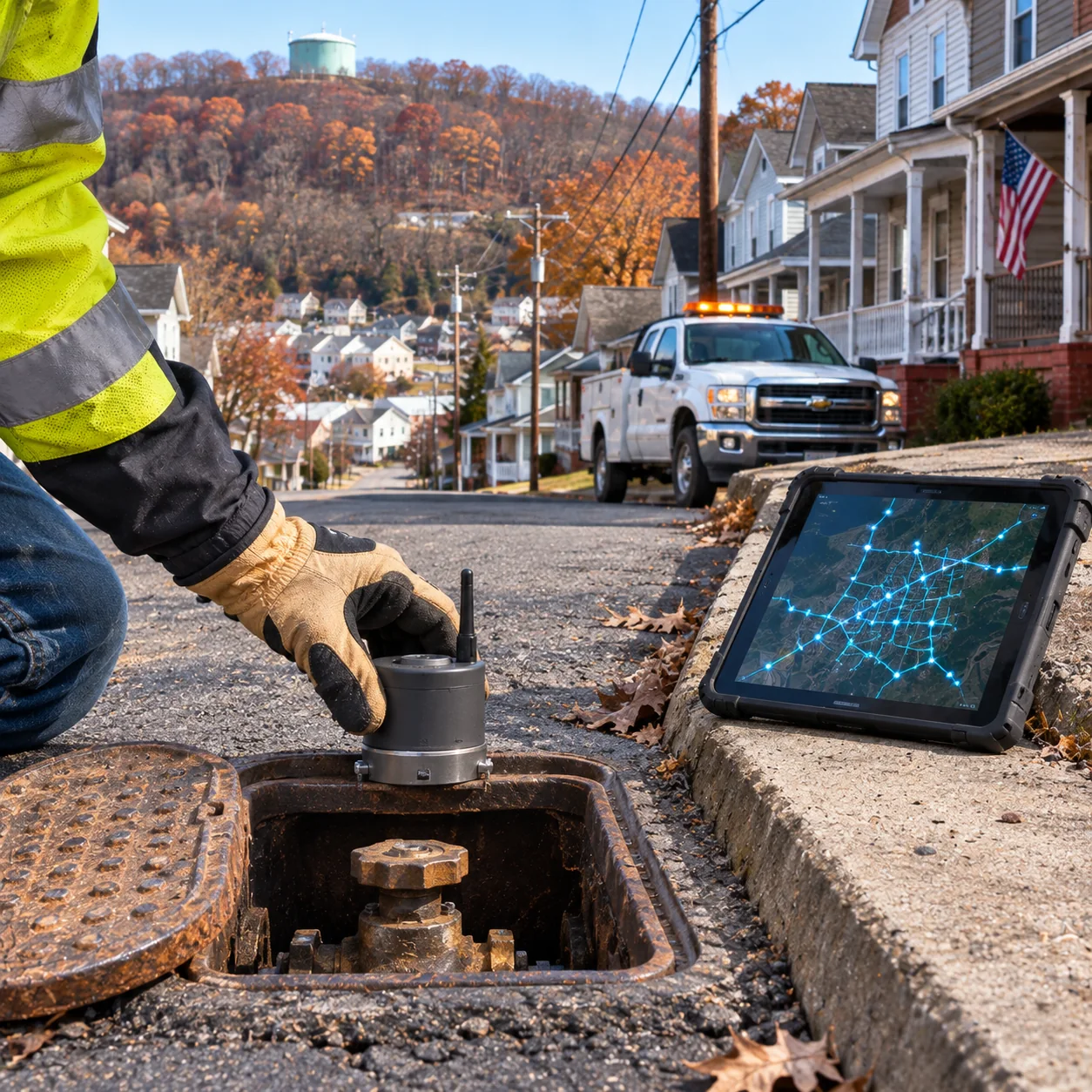
The twin runs on Bentley’s OpenFlows WaterSight platform. It pulls several streams of field data into one real-time view of the network, according to WaterWorld:
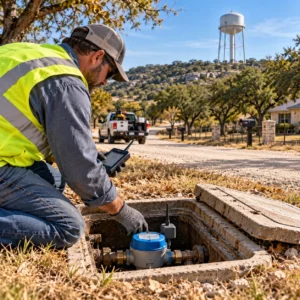
- 74 acoustic leak loggers listening across the distribution system
- 15 advanced metering infrastructure smart meters
- The authority’s existing SCADA system
- Other operational data sources already held by the utility
None of these pieces is new on its own. The value comes from putting them on one screen, so an operator can see a pressure change, a logger alert and a flow anomaly together rather than in three separate places.
Smith recalled his reaction when he first saw the model with all the data in place: “I kind of sat back and said, ‘wow.'” He added that when a problem appears, “I could get right on the phone with the operator.”
The Hard Part Was Integration, Not Software
The project did not run without friction, and the fixes are the most useful lesson for peers.
Some of Freeland’s SCADA automation data sat in formats WaterSight could not read directly. HRG, the software provider and technology partners built middleware to translate it, WaterWorld reports.
The acoustic loggers raised a second issue. Traffic noise and nearby mechanical equipment skewed some readings, and staff, HRG and the logger manufacturer spent several months relocating and recalibrating units until the data was reliable.
Both problems are common in small and older systems. Both were solved with persistence rather than a larger budget.
That matters for any utility weighing a similar move. The real cost of a digital twin is less about licenses and more about the months of calibration that turn raw signals into something an operator trusts.
Crawl, Walk, Run Keeps the Program Within Reach
HRG designed the rollout around Freeland’s staff capacity and budget. Bentley describes it as a phased crawl, walk, run approach.
The crawl phase imported existing operational data to create a unified live view. The walk phase added trend analysis and predictive alerts so issues could be addressed earlier. The run phase, still ahead, targets capital planning, what-if simulations and optimized operations.
HRG now provides monthly support, checking logger performance, reviewing WaterSight analytics, monitoring system health and flagging operational trends. The authority plans to add instrumentation and expand its AMI deployment, and to use the model for well level monitoring, drought performance and long-term asset management.
According to WaterWorld, staff have already reduced the time, labor, fuel, chemicals and energy needed to locate leaks, freeing resources for water quality work, upcoming PFAS requirements and infrastructure planning. Bentley reports that the authority has shifted from chasing leaks to preventing them.
Why Small Systems Should Pay Attention
The Freeland model offers a template that other small utilities can copy.
Start with the data already on hand. Add a modest number of acoustic loggers and smart meters in the parts of the network that matter most. Use a regional or state grant to carry most of the capital cost. Bring in an engineering partner for integration and ongoing support rather than hiring specialist staff.
River basin commissions, state revolving funds and state water agencies all fund water loss work in some form. Freeland’s grant shows that a well framed application for a data project can compete alongside traditional pipe and treatment requests.
Could a utility with a few operators run a live model of its network?
Could that model tell it which main to replace next?
Freeland’s answer to the first question is yes. The second is the goal of its run phase, and the payoff for ratepayers will come from capital dollars aimed at the pipes that are actually losing water.
Large utilities proved that digital twins work. Freeland is proving they can fit a small system’s budget.