A smart meter earns its keep when it tells someone something useful.
On November 1, 2026, the Brownsville Public Utilities Board in South Texas began sending customers a text or email when its meters show water running for an extended period. The program, first described by BPUB to KRGV in October, draws on the advanced metering infrastructure the utility has been installing across its service area since April 2025.
It is a modest service on paper. A message arrives, the customer checks a toilet, an irrigation line or a crawl space, and a leak gets fixed days or weeks sooner than a monthly bill would have revealed it.
Multiply that across a city and it becomes one of the more practical water loss tools a utility can switch on.
From Meter Reads to Leak Notices
BPUB spokesperson Alexa Perez told KRGV the alerts are triggered “whenever our system notices that a customer is using water for prolonged periods of time.” Depending on consumption, notices go out every 24 hours, weekly or biweekly.
That cadence is a sensible design choice. A customer with a steady, heavy flow gets a daily nudge. A smaller continuous draw, the kind that hides in a running fill valve, gets a gentler reminder that still lands well before the billing cycle closes.
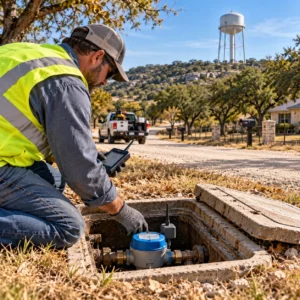
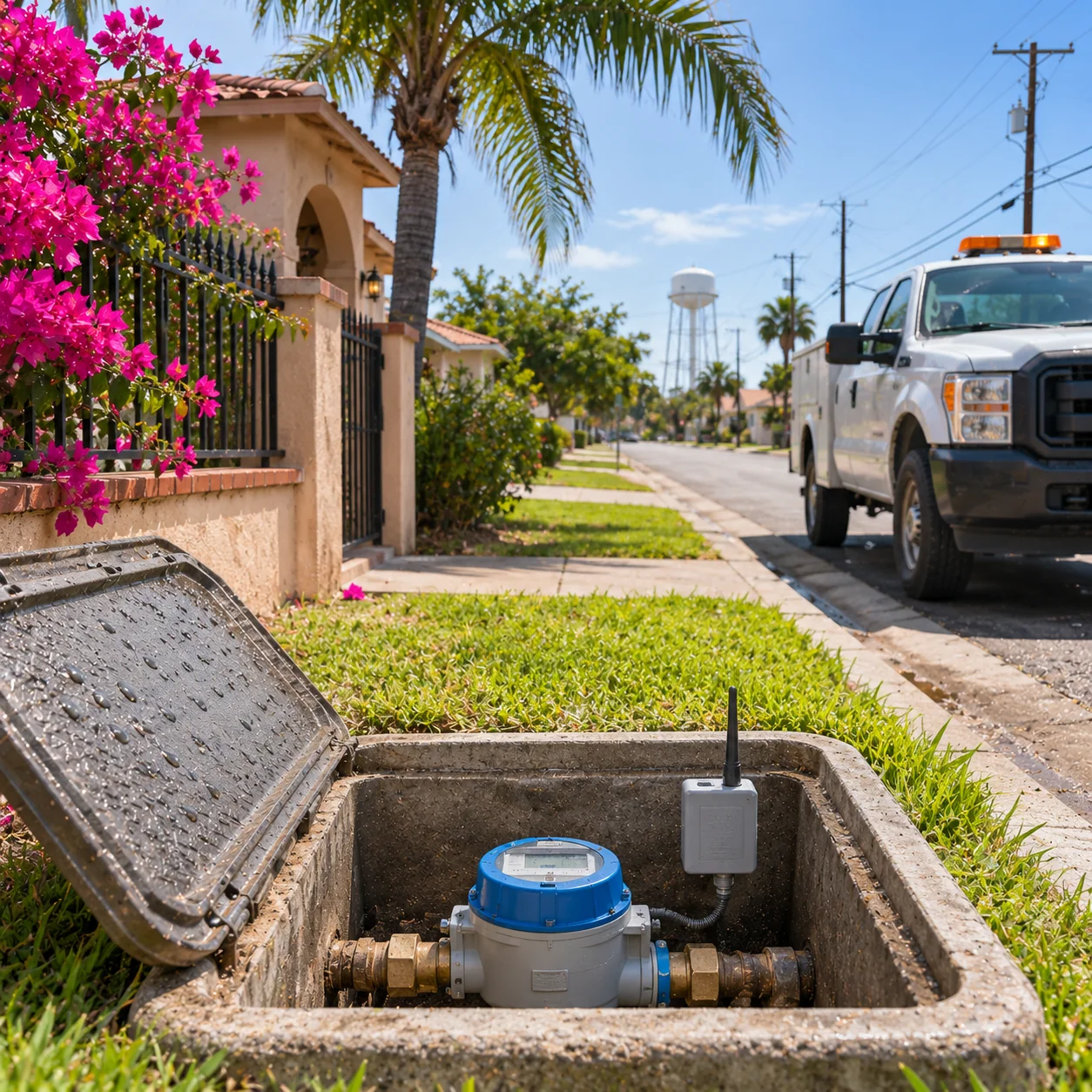
The underlying shift is in what the meter is for. A manual read produces one number a month. An AMI endpoint produces a usage profile, and a profile that never drops to zero overnight is the clearest sign of a leak on the customer’s side of the meter.
That change matters.
A Federal Grant With Water Loss at Its Core
The program is the visible end of a project years in the making. In 2023 BPUB received a $5 million WaterSMART grant from the U.S. Bureau of Reclamation to fund water AMI, according to a May 2023 announcement from E Source, the consultancy that helped prepare the application.
The scope described then was substantial: replacing more than 17,500 manual read meters with smart meters and retrofitting almost 40,000 more with AMI compatible registers and endpoints. E Source said water loss prevention was the project’s largest expected benefit, spanning distribution side leak detection, customer side leak detection, conservation tools, metering accuracy and theft detection.
BPUB set a target of conserving 2,103 acre-feet of water a year.
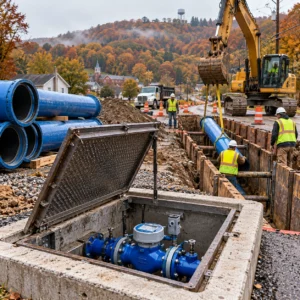
Field installation began on April 7, 2025, according to the American Public Power Association, with Allegiant Utility Services managing the meter upgrades and full deployment expected by 2027. Because BPUB runs both electric and water service, the rollout covers both sets of meters, which spreads the cost of the network across two utilities’ worth of data.
Trust Is Part of the Engineering
One detail in BPUB’s launch deserves attention from every utility planning something similar. The utility has said plainly that the alerts will never ask for money. Texts come only from the short code 96681, and emails come from a no reply BPUB address. Customers with questions are directed to the utility’s customer service line.
That is not a footnote. A leak notice is, by design, an urgent message about a customer’s money and property, which is exactly the format scammers imitate. A program that customers learn to ignore saves no water.
Utilities building customer alert programs should settle a few questions before the first message goes out:
- One fixed sender number and address, published widely
- A clear public rule that alerts never request payment
- Alert thresholds that separate real leaks from normal heavy use
- A cadence that escalates with the size of the flow
- A customer service script for people who receive a notice
- A way to track how many alerts lead to confirmed repairs
Why Customer Side Leaks Belong in the Water Loss Conversation
Water loss programs tend to focus on mains, service lines and pressure zones, the real losses a utility audit counts on its own side of the meter. Those losses rightly dominate capital planning.
Customer side leaks are different. The water is metered and billed, so it does not show up as non revenue water. It still has to be pumped, treated and delivered, and it still shows up as demand the system has to meet.
In Texas the pressure to manage both is real. The Texas Water Development Board sets water loss thresholds for utilities seeking drinking water financial assistance, and a utility at or above its threshold must direct part of its funding to mitigation such as leak detection or pipe and meter replacement. The same AMI network that drives customer alerts also improves meter accuracy, which feeds directly into the apparent loss side of a water audit.
So the customer alert is the most public output of a system whose quieter outputs, better meter accuracy and better consumption data, help the utility understand its own losses.
What Comes Next for Brownsville and Its Peers
The first months of the program will produce the numbers worth watching: how many customers receive notices, how many fix a leak, and how quickly consumption drops after an alert. With deployment still running toward 2027, coverage will widen as more meters come online.
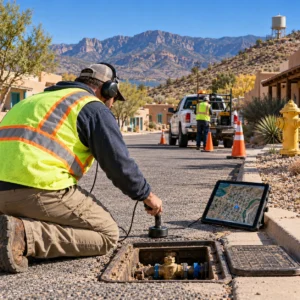
Brownsville is not alone. In California, the San Gabriel Valley Municipal Water District announced on October 29, 2026 that it had awarded $50,000 each to four member cities, with Monterey Park starting a proactive acoustic leak detection program and Sierra Madre buying meters with pressure and temperature sensors to improve leak detection.
The pattern is consistent. Utilities are moving from collecting meter data to acting on it.
How many leaks are sitting behind meters that already know about them?
How much water could a text message save?
Brownsville spent years building the network. Now the network is starting to talk back.