New Mexico has put a number on what satellite leak detection can do for small water systems.
On October 6, the New Mexico Environment Department released the Year One summary of LeakTracer, its statewide program that pairs satellite radar with field inspection. Working with ASTERRA USA, the program surveyed 28 utilities, inspected 181 miles of distribution pipe and identified 216 leaks.
Repairing those leaks would save an estimated 328 million gallons of drinking water a year, about 898,000 gallons a day, according to NMED. The department says that equals the annual use of 6,400 New Mexico households, and that participating systems stand to cut water production costs by roughly $505,000 a year.
For a sector that often struggles to justify leak detection spending at small utilities, those are useful figures.
The Program Was Built for Systems That Cannot Fund Their Own
LeakTracer targets the utilities that usually sit at the back of the queue for new technology.
According to the Year One report prepared by ASTERRA USA, 84% of New Mexico’s drinking water utilities serve fewer than 500 connections, and some local systems have real water losses of 40% to 70%. Those customer bases, the report notes, cannot carry the cost of large capital programs to maintain ageing pipes.
The state’s answer is to pay for the search centrally. Funding comes through the Rural Infrastructure Program, which by statute focuses on communities under 20,000 people, counties under 200,000 and mutual domestic water associations. After a pilot in May 2025, NMED and ASTERRA entered a four-year, $4 million agreement, and the report says the program will continue through 2029.
That structure matters.
A rural system with two operators rarely has the budget, staff time or procurement capacity to run a leak detection survey. A state program removes all three barriers at once.
How Satellite Screening Narrows the Search
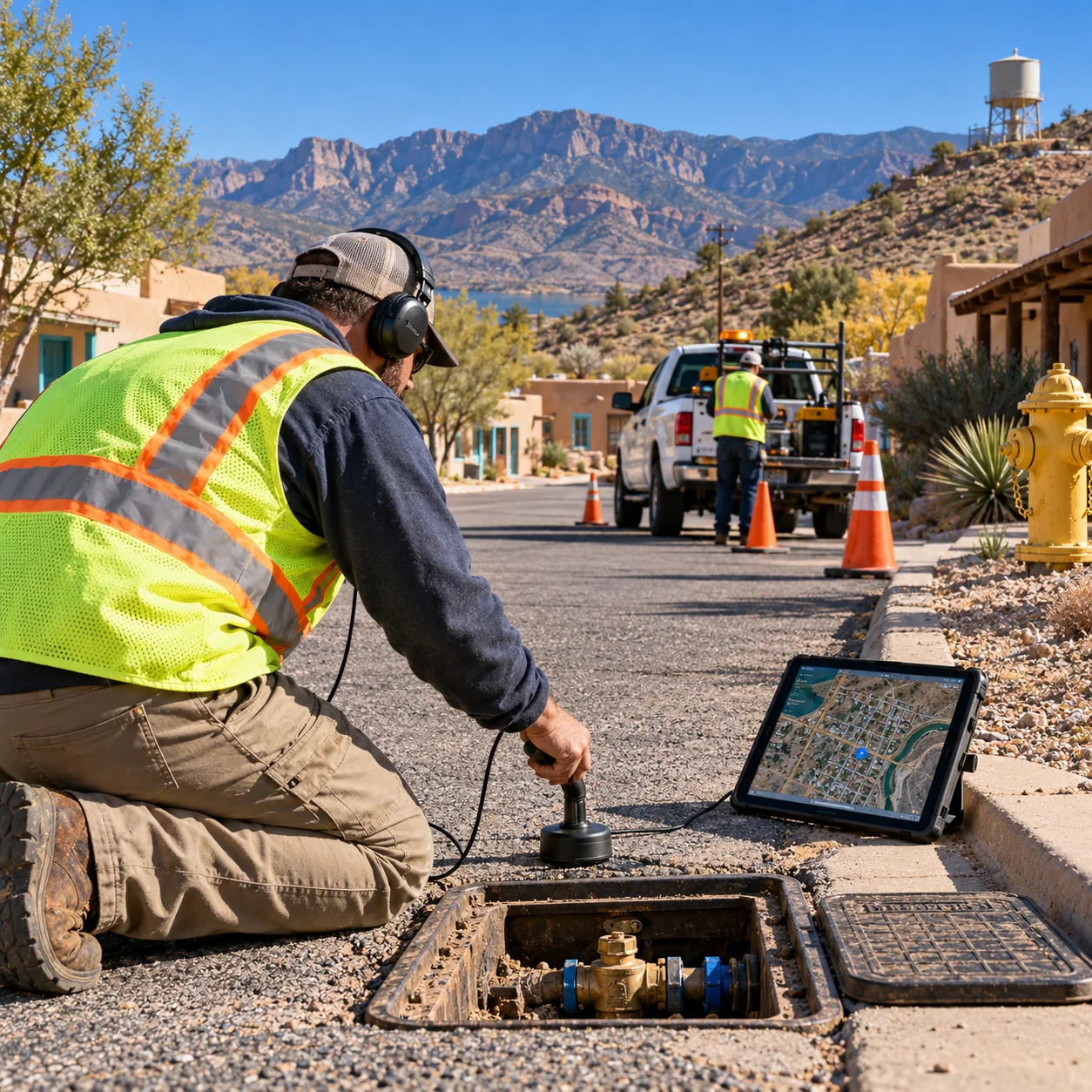
The method combines remote sensing with conventional field work. ASTERRA uses L-band synthetic aperture radar, which NMED says can penetrate soil, asphalt, trees and pavement, to flag likely leak locations. Inspectors then visit those points of interest to confirm and pinpoint leaks on the ground.
The productivity numbers explain the appeal. According to the report, LeakTracer found 216 leaks in 130 days of field inspection, a rate of 1.7 leaks per crew day and 1.2 leaks per mile inspected, working from 906 points of interest.
Crews spend their time where the radar says water is escaping, rather than walking an entire network.
“Now, we can fix leaks before we can see them, saving water, money and time,” said Rolf Hechler, Mayor of Truth or Consequences, describing the shift away from waiting for water to surface or for a customer complaint.
Where the Water Was Going
The breakdown of the 216 leaks is instructive. NMED reports 45 on main lines, 54 on service lines and 117 on customer-owned lines.
Truth or Consequences recorded the largest result, with 42 leaks totalling an estimated 140.5 gallons per minute. Belen followed with 26 leaks and 71.9 gallons per minute, and Los Lunas with 16 leaks and 41.4 gallons per minute.
Utilities in the program received a dashboard showing leak locations and sizes. According to the report, most prioritised high-priority repairs and fixed leaks that did not need excavation, with meter, valve, curb stop and hydrant leaks typically repaired immediately.
The Eldorado Area Water and Sanitation District offers a clear before and after. General Manager Maya Clifford said in the report that the survey found large main leaks and many smaller service line leaks that the district did not expect, and that its lost water percentage is now back to 6%.
Read the Estimate the Way It Was Built
The headline savings are an estimate, and the report is open about how it was produced.
Volumes were calculated from average leak sizes in AWWA Manual M-36 rather than measured flow, and the value is realised only when leaks are repaired. The report states plainly that it is incumbent on the utilities to fix the leaks to realise the value of the program. More than half of the leaks found sit on customer-owned pipe.
NMED and ASTERRA are already addressing that gap. The report says the next work plan will request information on repairs and non-revenue water reduction so that actual water savings can be documented.
For utilities and funders elsewhere, that is the part to watch. A program that can show verified savings, not just detections, builds a far stronger case for the next round of money.
A Model Other States Can Copy
LeakTracer serves Action A3 of Governor Michelle Lujan Grisham’s 50-Year Water Action Plan, which aims to reduce water loss from public drinking water infrastructure by 25% by 2040.
The model has several features that transfer well to other states with many small systems:
- Central procurement of a single detection provider
- Funding through an existing rural infrastructure program
- Satellite screening to cut field time per leak found
- Clustering nearby utilities into shared survey areas
- A dashboard that turns findings into work orders
- Follow-up reporting to document actual savings
The first year covered 117,400 people, or 5.5% of the state’s population, according to the report. NMED and ASTERRA are now planning further survey areas around Artesia, Las Cruces and Alamogordo, with 27 more utilities queued.
“Communities can save hundreds of millions of gallons of water a year, protect ratepayers in the process, and make their water systems more resilient,” said Environment Secretary James Kenney.
Finding the leaks was the first year’s job. Proving the repairs will be the next.