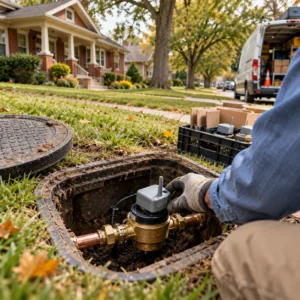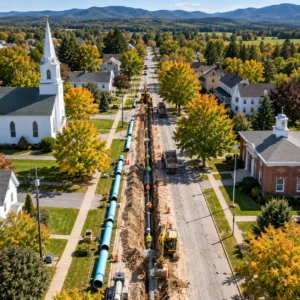
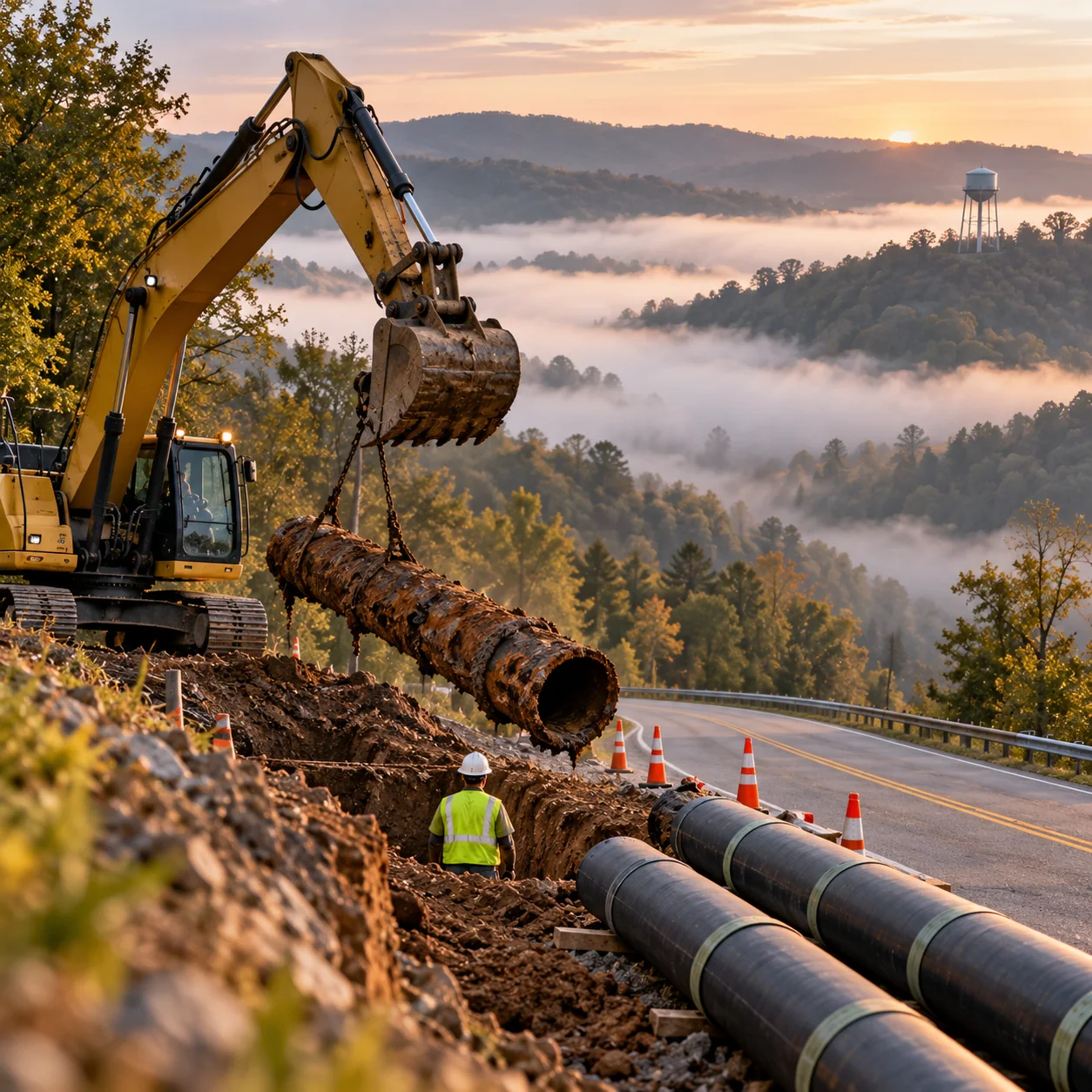
A 1960s water main in West Liberty is finally coming out of the ground.
On September 22, West Virginia Governor Patrick Morrisey announced a $2 million grant from the state Water Development Authority’s Economic Enhancement Grant Fund for water system improvements in Ohio County. The biggest piece of work replaces an aging 12-inch cast iron main along Route 88 with a new 5,300-foot section of pipe.
The Governor’s office says the line has suffered recurring breaks that caused outages for the community and for West Liberty University. The same grant pays to sandblast and recoat a 500,000-gallon elevated storage tank near The Highlands, install aeration mixing systems that limit disinfection byproducts, and move an altitude valve to end stagnation at the West Liberty tank.
The dollar amount is modest. The way the money is being targeted is the more useful lesson for utilities.
A Main With a Break History Is the Right Place to Start
A main that keeps failing costs a utility in several ways at once. Water that has already been treated and pumped is lost. Crews are pulled off planned work. Customers lose service, and in this case so does a university campus. Each repair puts a clamp on one spot while the rest of the pipe keeps ageing.
That is why break history makes a stronger case for capital than age on its own. Cast iron mains laid in the 1960s are common across older American systems, and few utilities can afford to replace all of them at once. The ones that have shown they will keep failing belong at the front of the queue.
Route 88 is one of those.
Replacing 5,300 feet in one project takes out an entire problem section instead of patching one break after another. For a small system, that changes both its operating budget and its water balance.
Small Systems Need Funding That Pays for Specific Projects
The grant was secured in partnership with the Ohio County Public Service District, with engineering by Vaughn, Coast & Vaughn, according to the Governor’s office. It covers four separate jobs: distribution main renewal, storage tank rehabilitation, water quality treatment in storage, and a hydraulic fix to keep water moving.
Grouping the work this way matters. Small utilities rarely have the staff to run several funding applications in parallel. A single grant that covers pipes, tanks and water quality lets one engineering team plan the whole package and lets the utility show results in one place.
“Safe, reliable drinking water is something no community should ever have to worry about,” Morrisey said. Speaking at the announcement in Wheeling, Randy Wharton called safe, reliable drinking water “one of the most important products government can provide for its citizens,” according to The Intelligencer.
The Grant Fits Into a Larger State Water Strategy
The Ohio County award is part of a broader program. In August, Morrisey committed $145 million in state funding for water and wastewater infrastructure over the coming year. Marshall University says the state aims to use that money to attract an additional $450 million in federal and private funding. WCHS reported that the investment puts West Virginia on track to pass $1 billion in total water projects.
The strategy has four parts: faster project oversight, funding based on need, modernized utility laws and public accountability. WTOV described Ohio County as “next in line,” which suggests more announcements of this kind are coming.
The support around the money may count for as much as the money itself. Grant Resource Centers based at Marshall and West Virginia University, together with the state’s 11 regional planning and development councils, will give grant writing and technical help to small and understaffed water systems. Sara Payne Scarbro, the program’s principal investigator, said the centers have helped West Virginians secure more than $55 million in competitive funding over three years.
For utilities with only a handful of staff, that kind of help often decides whether a project gets funded at all.
What Utilities Can Take From the Ohio County Approach
The project offers a practical model for small and midsize systems preparing their own funding requests:
- Rank mains by documented break history, not only by install date
- Tie each replacement request to recorded outages and the customers affected
- Combine distribution, storage and water quality fixes into one fundable package
- Use state and university technical help for grant writing
- Record break counts before and after replacement so results can be shown
- Pair pipe renewal with water audit data to estimate the water recovered
None of this needs new technology. It needs disciplined records and a clear account of what each failing pipe costs.
Funding Based on Need Will Have to Be Measured
Two parts of the West Virginia strategy, funding based on need and public accountability, raise the obvious next question. How will the state show that the money went to the right pipes?
The most convincing answers will be simple ones: fewer breaks, fewer outages, and less treated water lost before it reaches a meter.
Utilities that can produce those numbers will compete better for the next round of awards. Systems that cannot will find it harder to show need, however real it is. For engineering firms and contractors, a steady flow of small-diameter main replacement and tank rehabilitation work across the state looks increasingly likely as the $145 million is allocated.
For the rest of the country, the lesson carries over. State programs work best when they reach systems too small to compete well for large federal awards, and when each dollar goes to an asset with a documented record of failure.
Large programs make the headlines. Projects like the 5,300 feet of new pipe on Route 88 are where they start to show results.