Pleasanton is starting over on its metering network.
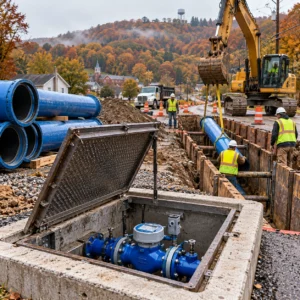
The California city is replacing more than 22,000 water meters at homes and businesses, along with the Advanced Metering Infrastructure system that reads them, in a project expected to cost about $12 million, the Pleasanton Weekly reported on November 12, 2026. The city says installations begin in south Pleasanton and move through the service area zone by zone, with work continuing through 2027.
On the surface it is a meter swap. In practice it is a utility rebuilding the data layer it needs to find leaks, bill accurately and meet California’s new real water loss standards on time.
A Failing AMI System Became a Water Loss Problem
The metering system itself is the issue. According to the Pleasanton Weekly, the city’s meters and AMI network have suffered widespread failures for some time. A city staff report prepared for the June 16 council meeting said those failures “have resulted in billing inaccuracies, increased water loss, higher maintenance demands” along with rising operating costs.
That is the quiet risk of any first generation smart metering program.
When endpoints stop reporting, a utility loses more than a billing read. It loses the interval data that shows continuous flow behind a customer meter, the consumption pattern that flags a slow drip, and the reliable customer side numbers that every water balance depends on. Apparent losses rise because meters undercount or go unread. Real losses become harder to separate from the noise.
Pleasanton’s Public Works Department had already replaced about 4,000 meters before the full program started, according to the Weekly. The city hired Diameter Services in 2025 to evaluate the system and help shape the replacement strategy, and the installation work is being handled by Core & Main and Concord Utility Services.
The New Meters Are Built to Spot Unusual Use
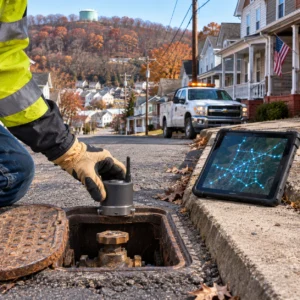
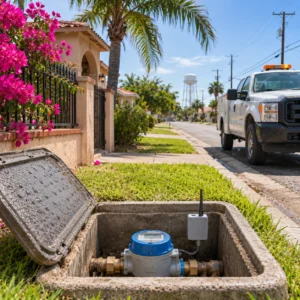
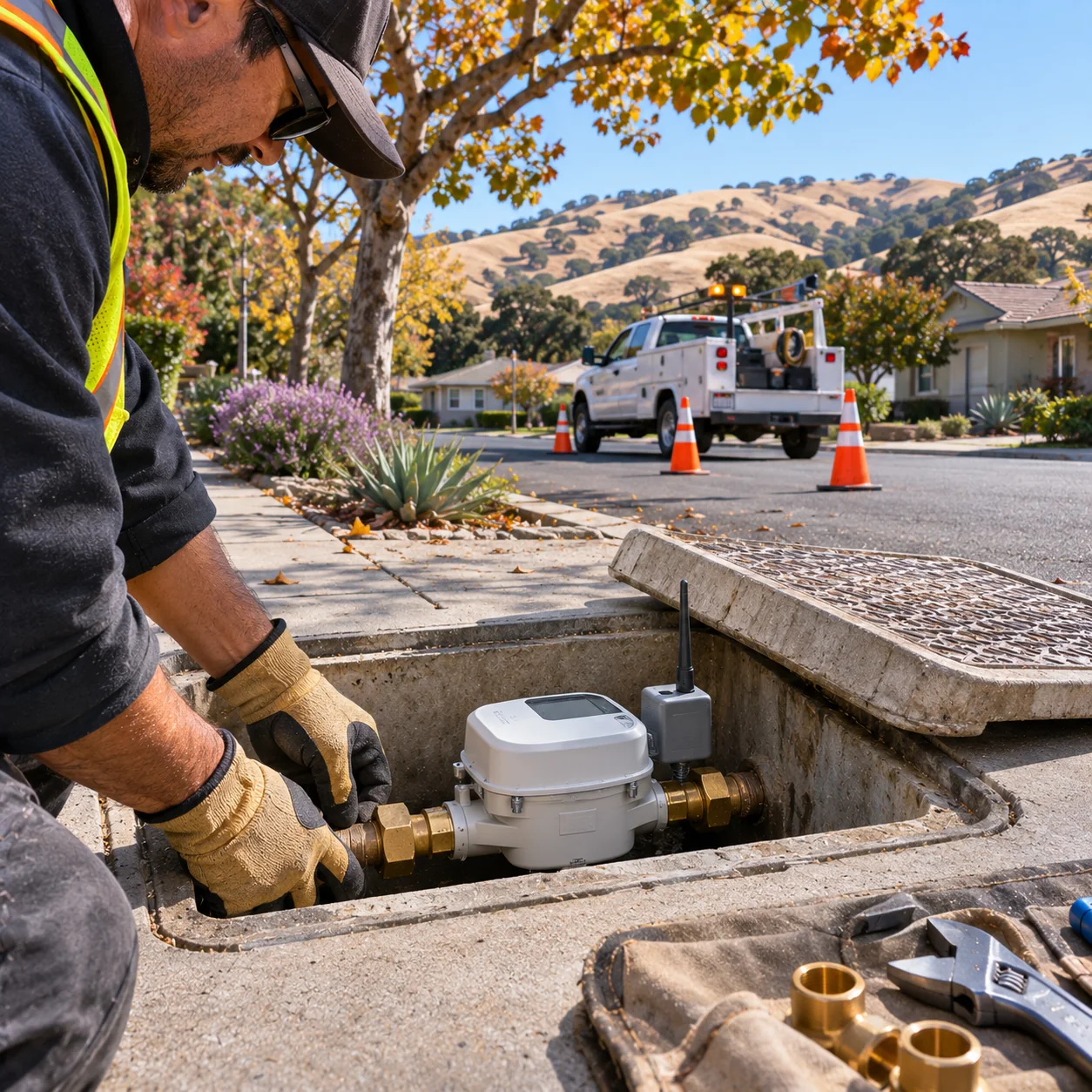
The replacement meters use ultrasonic flow measurement and include data logging designed to flag unusual use that may indicate a leak, according to the city’s project page. They continue on an AMI platform that collects water use data throughout the day rather than once a billing cycle.
Customers will be able to track their use through the MyWater Pleasanton app and online portal and receive alerts about unusual consumption.
That customer facing piece matters more than it may appear. Catching a leak behind the meter in hours instead of at the next bill protects both the household and the utility’s relationship with its ratepayers. Ultrasonic meters, with no moving parts, also tend to hold their accuracy at low flows, which is exactly where small leaks and meter undercounting hide.
Installation is designed to be light touch. The city says customers get advance notice, a technician knocks on installation day, residents do not need to be home, and service is shut off for roughly 30 minutes.
California’s Real Water Loss Standards Set the Clock
The timing is not accidental.
Under the State Water Resources Control Board’s Making Conservation a California Way of Life framework, urban retail water suppliers face Real Water Loss Performance Standards aimed at cutting physical losses from leaks, breaks and other distribution inefficiencies. In a January 20, 2026 council report, Pleasanton staff listed January 1, 2028 as the date for compliance with individualized performance standards and the state specified water loss target.
The same report was direct about what compliance takes. Meeting the new real water loss standards by 2028, staff wrote, “requires capital investment in pipeline rehabilitation, pressure management, advanced metering, and improved data systems.” It also noted that part of the city’s recent water rate increase is associated with new water loss control measures.
Metering is the first item on that list a city can deliver at scale and quickly. Validated water audits, which the state already requires annually, are only as good as the customer consumption data feeding them. A utility that cannot trust its meters cannot trust its estimate of real losses either.
One Field Program Doing Several Jobs at Once
Pleasanton is also using the meter rollout to meet a separate obligation. According to the January staff report, contractors will carry out concurrent inspections of service line materials during meter replacement to confirm compliance with lead and copper requirements, and staff are prioritizing 380 meter replacements at properties built before 1985 and at vulnerable facilities such as schools, daycare centers and senior centers. Earlier sampling found no lead pipes in the city’s system, the report says.
The report also notes the meter project was accelerated to meet a target completion date set in a settlement agreement with Zone 7 Water Agency, which supplies all of the city’s water today.
That bundling is a useful model for other utilities. A program that visits every service connection is a rare chance to collect data on all of them at once.
- Pair meter replacement with service line material verification
- Prioritize older neighborhoods and sensitive facilities first
- Launch customer leak alerts alongside the new endpoints
- Feed new interval data straight into the annual water audit
- Track recovered apparent losses as a measurable return on the project
What Comes Next for Pleasanton and Its Peers
Pleasanton distributes roughly 14,000 acre feet of water a year to more than 22,000 customers through over 300 miles of mostly underground pipe, according to the city. Once the new meters are in place, the utility will have a far clearer view of where that water goes.
The project is funded through the city’s water enterprise fund, including water revenue bond proceeds, and customer water rates. Mayor Jack Balch told the Pleasanton Weekly that “the City Council has spent a lot of time over the past few years looking closely at what our water system needs.”
Every urban retail supplier in California faces the same 2028 compliance date, and many are running metering systems that are well into middle age.
How many of them are counting on endpoints that are already failing?
How many will know their real losses with confidence when the standard takes effect?
Pleasanton’s answer is to fix the foundation first. Pipe rehabilitation and pressure management still lie ahead, but they will be planned with better numbers.
Water loss control starts at the meter. Pleasanton is making sure its meters can be trusted again.