Corporate water money is starting to reach the distribution main.
On September 1, the Broken Arrow City Council in Oklahoma voted to accept a $795,000 Google Water Replenishment Program Sponsorship Award to put an acoustic leak detection program in place. According to the city, the award covers the full cost with no local match, and it will improve the city’s ability to find and repair water leaks.
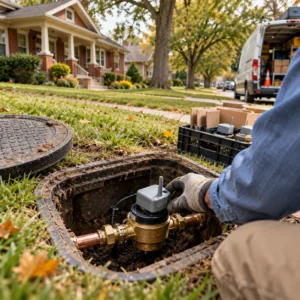
The scope is practical. City staff told the council that the project includes an acoustic leak detection network, 12 additional pressure gauges, a crew vehicle linked to the detection system, staff training and a standby generator at the Greenbrier booster pump station. Their targets are a 25% reduction in non-revenue water by 2030 and about 120 million gallons saved each year once the program is fully running.
The dollar figure is modest. The funding model behind it deserves more attention.
A New Funding Channel Has Opened for Water Loss Work
Leak detection programs in the United States have usually been paid for from operating budgets, rate increases or state revolving fund loans. Broken Arrow’s award comes from a different source: a technology company that has to account for the water its data centers use.
Google has committed to replenishing more freshwater than it consumes by 2030. The company says its portfolio covers 165 projects across 97 watersheds and is expected to replenish more than 19 billion gallons a year once fully implemented. In June, Google said its water stewardship funding had grown from $17 million to $77 million and that the number of participating states had risen from seven to 12. More than 700 proposals came in through its Water Replenishment Projects request for information.
That request for information lists leak detection systems by name under its infrastructure category. Outside California, Google says projects can receive $350,000 to $6 million each and must deliver at least 100 million gallons a year of water benefit. No matching funds are required, and the money can cover capital costs, operations, maintenance and monitoring.
Broken Arrow’s projected 120 million gallons a year clears that threshold with some room to spare.
That matters for utilities.
Leak Reduction Gives Replenishment Buyers What They Need
Replenishment programs need water benefits that can be counted, checked and reported. Many conservation projects find that hard. Reducing real losses in a distribution system is different: a utility with a sound water audit can estimate the volume before work starts and measure it once repairs are made.
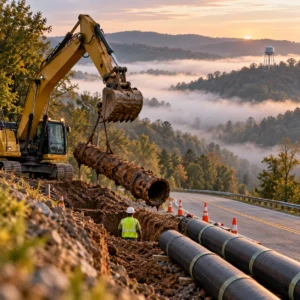
There is plenty of volume available. Bluefield Research estimates that 19.5% of treated drinking water in the United States is lost before it reaches customers or is improperly billed. That works out to about 6.75 billion gallons a day and $6.4 billion a year in revenue utilities never collect. Bluefield attributes roughly 87% of that loss to leaks and pipe bursts, and says small and very small utilities report losses above 20% of total supply.
What does a corporate water buyer want from a project?
A number it can defend.
A mid-sized utility with a documented non-revenue water problem and a credible plan to fix it can offer exactly that.
Detection Only Pays When Crews Can Act on It
The Broken Arrow package is better designed than a simple sensor purchase. The sensors are paired with the things that turn an alert into a repair.
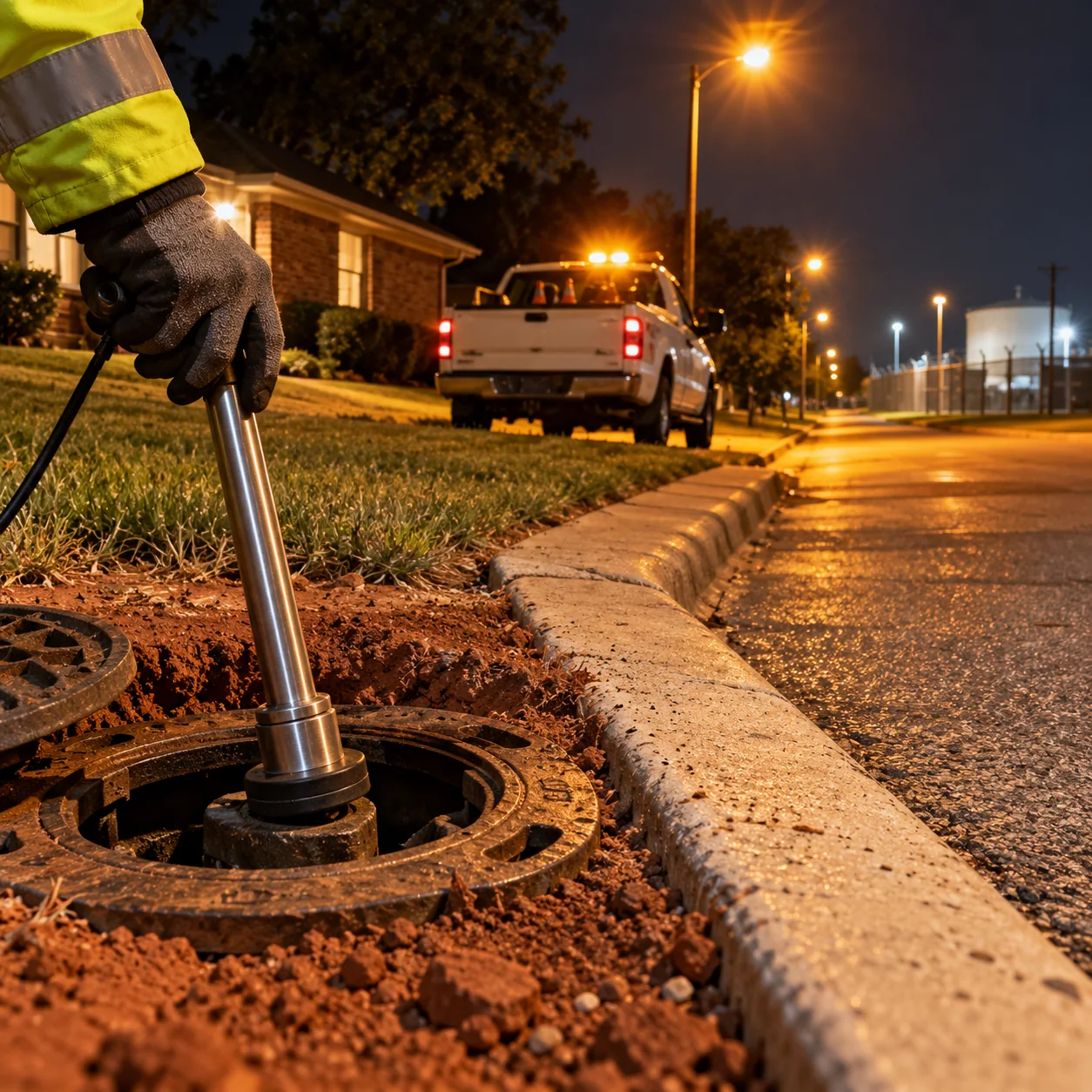
The acoustic network listens for leaks that never reach the surface. The extra pressure gauges give operators visibility of how the network behaves, which supports both leak location and future pressure management. The dedicated crew vehicle ties field response directly to the detection system. Staff training makes sure the data is used rather than archived.
The standby generator at the Greenbrier booster pump station is easy to overlook. Keeping a booster station running through a power outage protects service, and it also avoids the sudden pressure swings that can stress aging mains.
Many leak detection pilots have stalled because a utility bought hardware without the people, vehicles and workflows to respond. Broken Arrow put the whole loop in one funded scope.
What Utilities Should Take From Broken Arrow
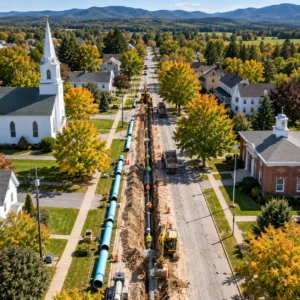
Broken Arrow’s case gives other utilities a template for approaching private replenishment funders, and it sits comfortably beside conventional finance. At the same meeting, the city’s trustees approved a $19.3 million contract with Crossland Heavy Contractors for wastewater treatment improvements at the Haikey Creek facility, financed through an Oklahoma Water Resources Board loan. Large capital work still runs through public lending. Targeted water loss programs can increasingly be funded elsewhere.
Utilities preparing similar proposals should consider:
- Starting from a validated water audit so savings estimates hold up
- Sizing the project to the funder’s minimum volumetric benefit
- Pairing acoustic sensors with pressure monitoring
- Budgeting for repair crews and response times, not only hardware
- Planning how savings will be measured and reported over the full funding term
- Treating private awards as a complement to SRF and state loans, not a replacement
Private Water Money Will Reward Measurable Results
Google has received far more proposals than it can fund, and other large water users face similar pressure to show local benefit where they operate. Utilities that can document losses and commit to verified savings will be first in line.
That also raises the bar on delivery. Broken Arrow has set public targets for 2030, and a corporate funder will expect the gallons to appear in the audit. Utilities taking this route will need to report losses with the same discipline they apply to water quality.
Technology vendors should take note as well. Demand for acoustic monitoring, pressure logging and analytics may increasingly come with funding attached, but only where the vendor can help the utility prove results.
For years, non-revenue water has been treated as an internal efficiency problem.
Broken Arrow shows it can also be an investable water benefit.