New York is paying down the cost of old pipe.
On September 10, Governor Kathy Hochul announced $85 million in grants and low-cost financing for drinking water, stormwater and sewer projects, approved by the board of the state’s Environmental Facilities Corporation (EFC). According to the governor’s office, board approval is the step that lets communities enter agreements and access the money, and every project at this stage has completed environmental review and met key program requirements.
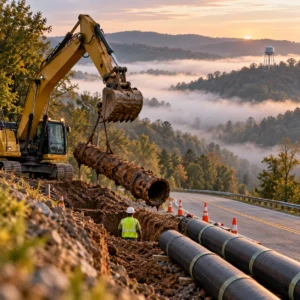
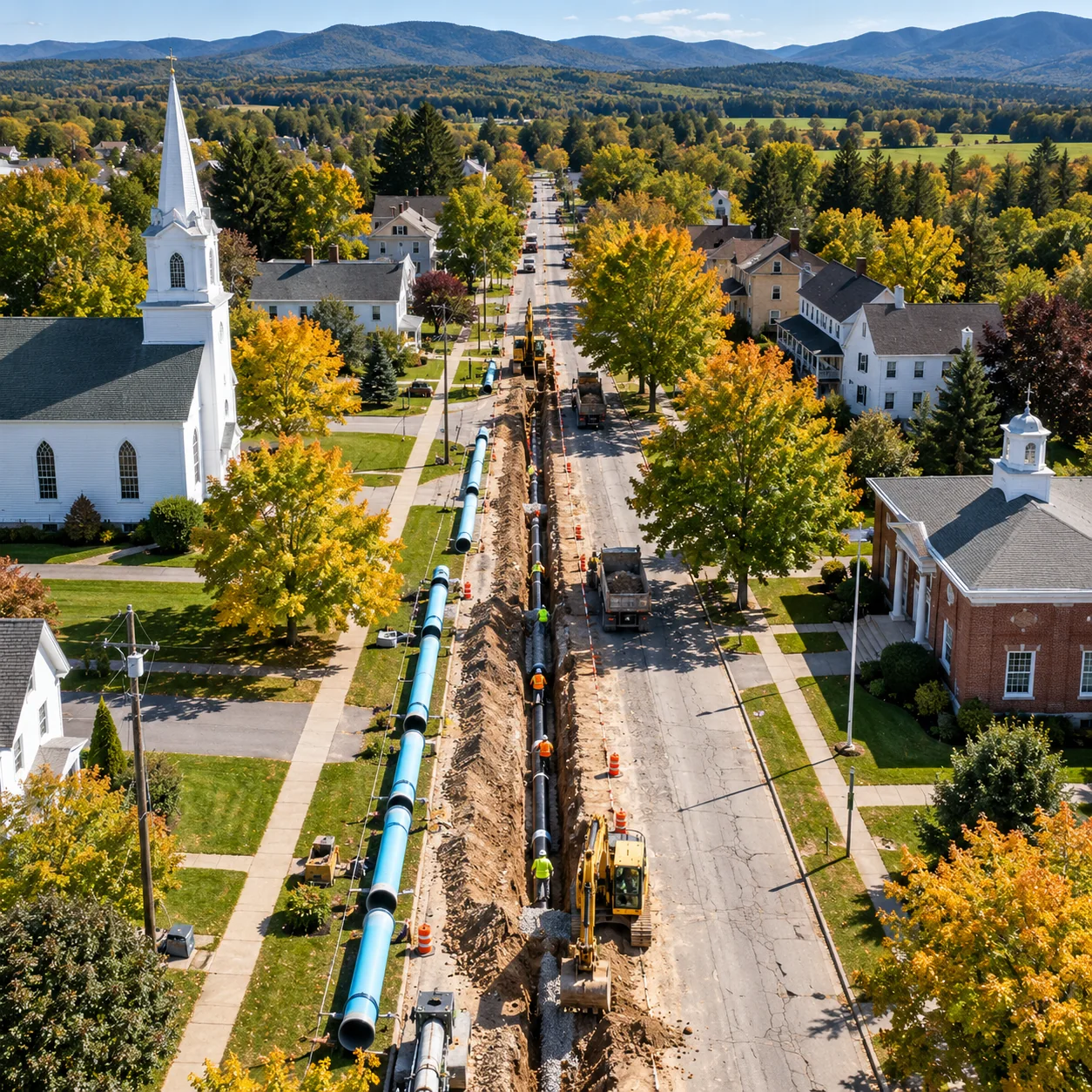
A large share of the drinking water money is going into the ground. Across the projects named in the announcement, communities from the North Country to the Southern Tier will install or replace more than 100,000 linear feet of water main, close to 20 miles, along with valves, hydrants and service meters.
For anyone working on water loss, that is the part to watch.
Small Systems Are Getting the Biggest Relative Lift
The project list reads like a map of rural and small-town New York. The Village of Croghan receives $9.9 million in state grant and interest-free financing to replace 26,000 linear feet of transmission main, replace and install another 11,000 linear feet of water main, renew valves and hydrants, and form a new water district that extends service to 12 new residents.
The Village of Belmont gets $8.5 million in grant and low-cost financing for well improvements, a new treatment plant filtration system and roughly 9,950 linear feet of replacement main. The Village of Addison receives a $1.7 million state grant for about 3,400 linear feet of new main, a 388,000-gallon storage tank and the looping of dead ends throughout its system. The Town of Queensbury has a $5 million federal grant for approximately 20,590 linear feet of main with valving, hydrants and service meters.
The largest single award, $31 million for the Dutchess County Water and Wastewater Authority, funds an interconnection between the Hyde Park and Quaker Hill systems, including about 29,500 feet of main and a booster pump station.
These are not big-city capital budgets. For a village, replacing five miles of transmission main is the kind of project that can overwhelm a small rate base without outside help.
That is exactly what the grants are for.
Pipe Renewal Is the Leakage Strategy That Lasts
Most of the attention in water loss goes to detection: acoustic sensors, satellite scans, smart meter analytics. Those tools tell a utility where water is escaping. They do not change the condition of the pipe.
On an aging main, crews can repair one leak and then come back for the next one months later. Replacement removes the source. When it is bundled with new valves and hydrants, as most of the New York projects are, it also improves a utility’s ability to isolate sections quickly, which shortens outages and cuts the volume lost during a break.
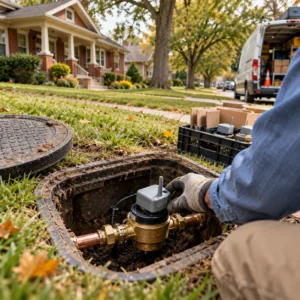
Some of the smaller details matter too. Queensbury’s project includes service meters, which gives better data for separating real losses from billing and measurement gaps. Addison’s looping of dead ends gives operators more ways to keep water moving when one segment has to be shut down.
None of this shows up as a headline leak detection deployment. It is where a lot of lasting non-revenue water reduction actually happens.
The Financing Structure Matters as Much as the Total
The $85 million is one approval round inside a much larger program. According to the governor’s office, New York’s Clean Water and Drinking Water State Revolving Funds deliver more than $1 billion a year in low-cost financing and grants. The state’s Water Infrastructure Improvement and Intermunicipal Water Infrastructure Grants have saved ratepayers more than $8.3 billion since 2015, with another $425 million in grant applications under review. Green Resiliency Grants, launched in 2023, have awarded $121 million.
The model works by stacking these sources. Croghan’s package pairs a grant with interest-free financing. Belmont and the Town of Paris pair grants with low-cost loans. For a small utility, that combination can be the difference between replacing a main within the next few years and patching it for another decade.
“EFC’s grants and low-cost financing are helping local governments tackle vital projects while protecting ratepayers from undue costs,” said EFC President Maureen A. Coleman.
Governor Hochul put it more directly, describing water infrastructure as “the essential investment it is, not a cost to put off until tomorrow.” The release also says fully funded State Revolving Funds remain necessary for communities to repair and rehabilitate aging infrastructure, a reminder that state programs depend on the federal backbone underneath them.
Investor-Owned Utilities Are Accelerating Their Own Programs
Public funding is not the only signal. On September 9, Pennsylvania American Water said it would accelerate a $5 million project to replace about one mile of aging main in downtown Scranton. The work was originally scheduled for 2028 and will now begin in spring 2027, timed to the city’s downtown streetscape improvements. Existing 24-inch and 6-inch mains will be replaced with a new 16-inch main.
The context explains the urgency. The utility says it maintains roughly 300 miles of water main in Scranton, about 50 miles of which date from before 1900, and it replaces 5 to 10 miles of aging pipe a year.
Coordinating main replacement with street reconstruction is one of the simplest ways to lower cost per foot. It is also a habit more utilities could adopt.
What Utilities Can Take From the New York Approach
The New York round offers a practical template for utilities trying to turn water loss goals into funded construction:
- Use leak detection and break history to rank mains, so funded replacement goes where losses are highest
- Bundle valves, hydrants and customer meters into every main project
- Finish environmental review early, since approval only reaches shovel-ready projects
- Stack grants with zero-interest or low-cost financing rather than relying on one source
- Coordinate pipe work with street and streetscape projects to cut restoration costs
- Track water audit results before and after replacement to show funders a measurable return
That last point deserves emphasis. Grant programs are competitive, and utilities that can show what previous funding achieved in recovered water and avoided breaks will have a stronger case for the next round.
Leak detection tells a utility where the water is going.
Funding like New York’s decides whether it can afford to stop it.