Columbia, Missouri has decided it no longer wants to wait for the next bill to find out a leak is running.
On September 21, the Columbia City Council authorized the purchase and installation of an advanced metering infrastructure system from Ameresco Inc. for the city’s electric and water customers. It also authorized the special obligation bonds that will pay for it, the Columbia Missourian reported. City staff put the cost at $41.8 million, plus about $640,925 a year in ongoing costs, according to KBIA.
The project covers the whole city. As presented to council in June, it covers 53,992 electric meters and 52,747 water meters, ABC17 News reported. Installation is expected to begin in spring 2027.
For the water utility the reasoning is simple. If a utility only sees consumption once a month, it only finds out about losses once a month.
A City Utility Is Paying for Visibility
Utilities Director Erin Keys described the benefits in terms any water loss manager would recognise. The system brings “reduction of water loss and potential to more quickly inform customers of water leaks,” Keys said, according to the Missourian, along with better transparency of electric and water usage for customers.
Columbia is not starting from a modern system. When the project came before council in June, city staff listed manual meter readings, equipment failures and a lack of data transparency among the problems, according to ABC17 News. “We really need to catch up with the way that other electric utilities around the state and around the country are doing their data collection,” City Engineering Supervisor Eric Wortz said at the time.
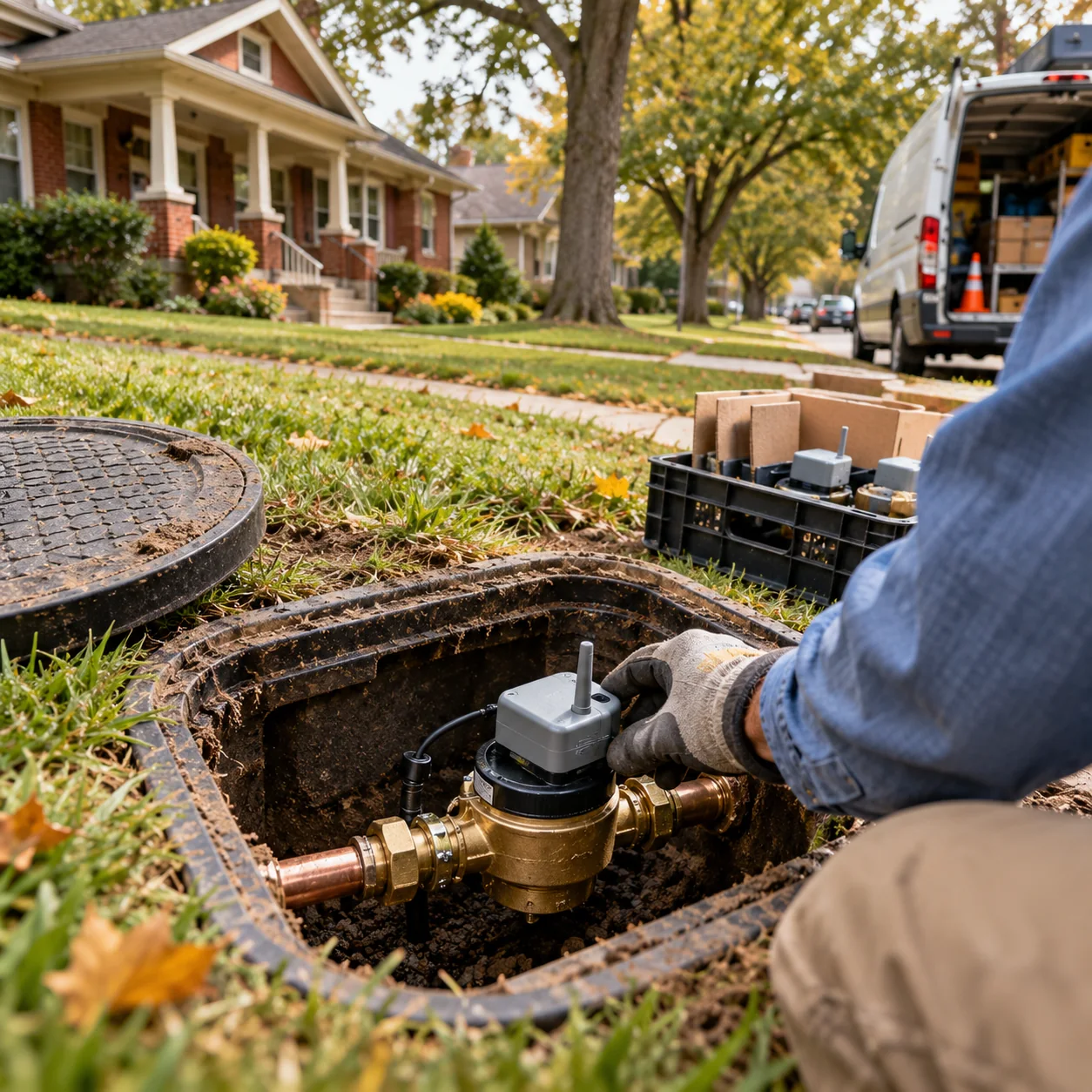
The new meters will send usage data to the city automatically. Customers will be able to see hourly and daily usage online and will get email alerts about possible leaks.
That change matters.
A leak that runs for a whole billing cycle wastes water, produces a shocking bill and leads to a dispute that takes staff time to settle. A leak flagged within a day or two is a phone call and a plumber.
Customer Leaks and Meter Error Are Part of the Loss Picture
Talk about non-revenue water usually centres on mains: breaks, hidden leaks and the acoustic or satellite tools used to find them. That work matters. But a large share of what utilities manage every day sits at the customer connection.
Leaks on the customer side of the meter are technically billed water. In practice they produce high-bill complaints, adjustment requests, unhappy customers and waste that undercuts conservation goals. Leak alerts based on interval data deal with that directly, and AMI programmes in other cities have shown that customers will act when told early.
The bigger gain for the water balance is apparent loss. Old meters tend to undercount the water passing through them, especially at low flows. Manual reads bring in transcription errors and estimated bills. When the meters are replaced and reads arrive automatically, the utility has a more accurate count of the water it actually delivered and charged for.
That is why AMI belongs in a water loss programme and should not be treated purely as a billing upgrade.
Splitting the Cost With the Electric Utility
Columbia’s approach has one structural advantage: the city runs both the electric and water utilities. One data collector network, one data management system and one customer portal will serve both. That spreads the fixed cost of the backbone across two utilities’ worth of meters.
City staff estimate that savings and added revenue will total $71 million over 15 years, KBIA reported, against up to $39.8 million in special obligation bonds. The savings come from several sources: fewer manual reads and truck rolls, faster detection of outages and leaks, and more accurate billing.
The water side will take longer. The electric meter changeout is expected to take about 18 months, while the water work is expected to take two to three years, according to ABC17 News. Water meters sit in pits, connections vary from house to house and some installations need plumbing work first. Water utilities planning their own AMI projects should budget for that.
Can a combined electric and water business case pay for an upgrade a stand-alone water utility might struggle to justify?
Columbia’s council has bet that it can.
What Utilities Planning AMI Should Take From Columbia
Columbia’s decision is one city’s choice, but it raises questions that apply to most US utilities planning an AMI rollout:
- Install oldest and largest meters first, where undercounting costs the most
- Set leak alert thresholds that catch real leaks without flooding customers with false alarms
- Plan customer outreach before the first alert arrives, not after
- Feed interval data into the annual water audit so apparent loss estimates improve
- Use aggregated hourly reads to compare supply and demand by zone
- Track savings against the original projections so future councils can judge the programme
None of this happens automatically once the meters are in. It needs staff time, clear processes and analytics that sit between the meter network and the billing system.
The Return Depends on What Happens After Installation
For water utilities, AMI is most valuable when it connects to everything else in the loss programme. Hourly consumption data makes a top-down water balance much more reliable. Combined with zone metering, it helps separate real losses on the mains from consumption at the tap. Over time it can also show where pressure management or main replacement will pay off fastest.
That makes execution critical.
Columbia now moves from approval to procurement and then to a multi-year installation starting in spring 2027. The test will be whether the utility turns the new data into faster repairs, fewer disputes and a smaller gap between the water it produces and the water it bills.
Mid-sized municipal utilities across the country face the same aging meters and the same pressure on budgets. Columbia’s vote shows how one of them made the numbers work.
Columbia has paid to see its water system clearly. The savings will depend on how quickly the city acts on what it sees.