Water loss has a funding line in Pennsylvania.
On 21 October 2026, Governor Josh Shapiro’s administration announced $190.3 million for 24 drinking water, wastewater and non-point source projects in 19 counties through PENNVEST, the Pennsylvania Infrastructure Investment Authority. Fourteen of those projects are drinking water.
Much of the attention in a round like this goes to PFAS treatment and lead service lines, and both are well represented. Read the project list closely, though, and a second theme appears. Three of the drinking water awards are explicitly designed to reduce water loss, and together they account for about $45.3 million.
That is a meaningful signal for every utility trying to justify leakage work to a board.
Conemaugh Township Is Buying Control, Not Just Pipe
The most instructive award goes to the Conemaugh Township Municipal Authority in Somerset County, which receives a $14,597,215 grant and a $4,669,785 loan.
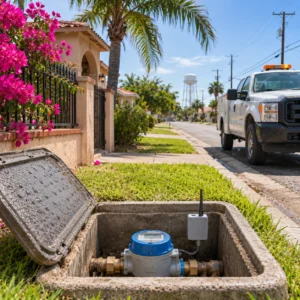
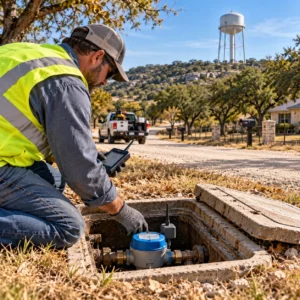
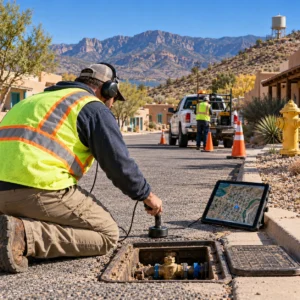
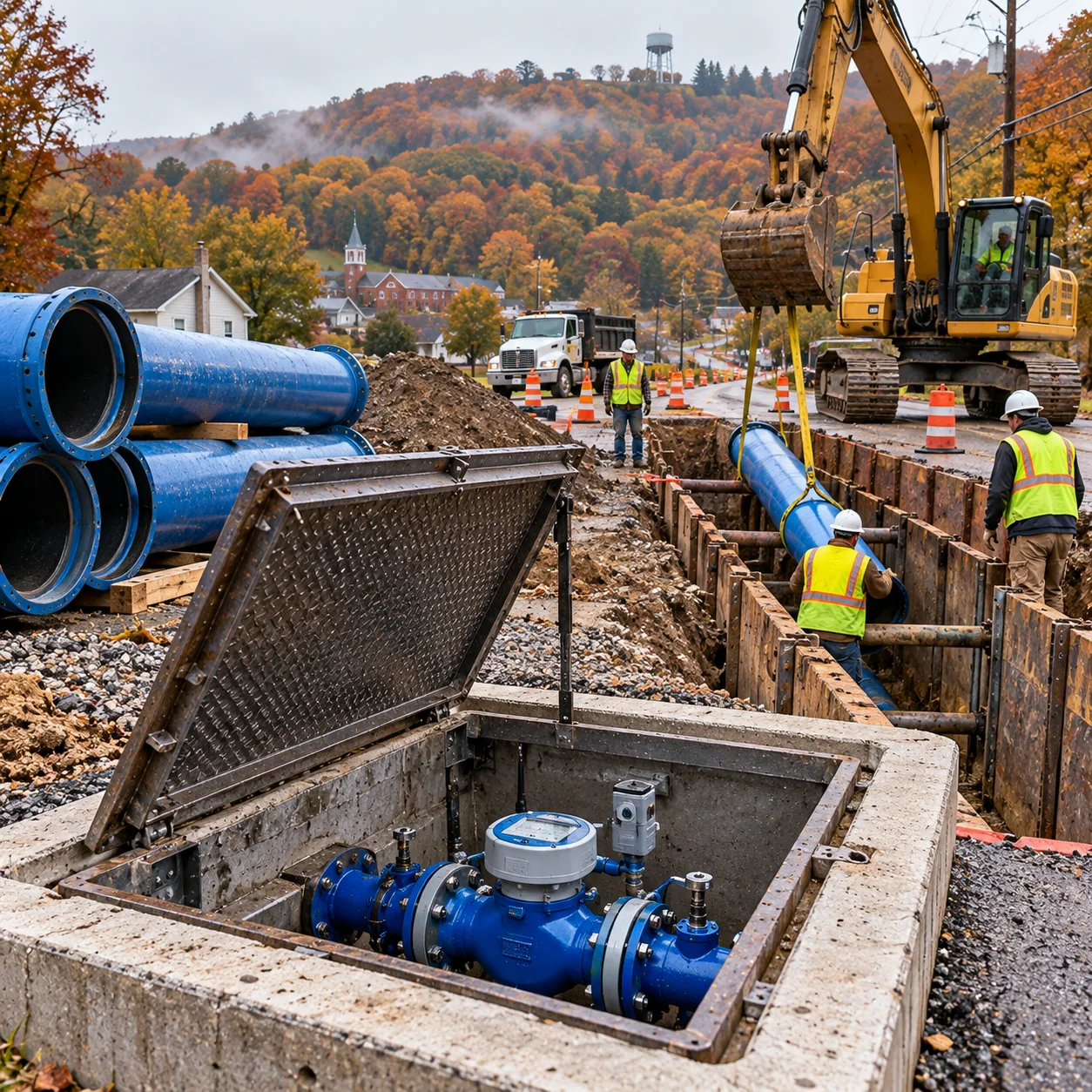
The project installs about 44,000 feet of water main. It also adds five district metering vaults, a new pressure reducing vault on Keafer Hill Road, a replacement pressure reducing vault on Route 403 in Holsopple, and a SCADA and telemetry system covering 20 facilities, according to the state’s announcement. The stated goals are less water loss, more reliable service and more energy efficient equipment.
That combination matters.
New main removes known failure points. District metering tells the operator where water is still disappearing once the new pipe is in. Pressure management reduces the stress that drives new breaks and increases flow through existing leaks. Telemetry ties the pieces together so the authority can see night flows and pressure transients rather than waiting for a customer call.
It is the textbook active leakage control package, funded at small system scale, and largely with grant money.
Bear Valley Shows How Leakage Ties to Supply
The largest single drinking water award, a $22,250,000 loan, goes to the Bear Valley, Franklin County, Pennsylvania, Joint Authority.
The authority will replace about 43,000 feet of distribution piping with pipe up to 16 inches in diameter and upgrade its treatment plant with a membrane filtration skid, new pumps and station improvements. According to the release, the work will raise the plant’s permitted capacity, reduce leakage and lessen the authority’s need to buy water from a neighbouring borough.
That last point is the business case many small systems miss.
Every gallon lost underground is a gallon that has to be produced or purchased. For a system buying bulk water, leakage is a direct cash cost, and cutting it reduces dependence on outside supply at the same time as it improves reliability.
Smaller Systems Are Getting Targeted Help
The Borough of Sharpsville in Mercer County receives a $3,798,000 loan to rehabilitate two structurally deficient water tanks and replace about 5,500 feet of aging, leaking water lines, along with hydrants and other appurtenances. The goals listed are reliability, regulatory compliance and less water loss.
The Borough of Linesville in Crawford County receives a $3,565,200 grant to replace about 7,000 feet of waterline on Penn and Mercer Streets, including about 90 service connections and 14 fire hydrants, and to remove a 4-inch line that may contain lead. The project is meant to lower operating costs and improve reliability and fire flow.
Across the Conemaugh, Bear Valley and Sharpsville projects, roughly 92,500 feet of main and distribution pipe is being replaced, about 17.5 miles in total, based on the figures in the release.
What Utilities Should Take From This Round
State revolving funds have always been able to pay for pipe. What stands out in the October round is how clearly water loss reduction is written into the project purpose, and how often it is paired with measurement.
For utilities preparing their own applications, the funded projects suggest a template:
- State water loss reduction as an explicit project goal
- Pair main replacement with district metering so savings can be verified
- Include pressure reducing stations where pressure drives breaks
- Add telemetry so the system can be monitored after construction
- Show how leakage cuts affect purchased water or treatment costs
- Bundle tank, hydrant and valve work where it shares the same corridor
PENNVEST notes that for its revolving fund and Infrastructure Investment and Jobs Act projects, a grant may take the form of a principal forgiveness loan. Funding in this round draws on voter approved state funds, Growing Greener and Marcellus Legacy money, federal infrastructure dollars, EPA grants and recycled loan repayments.
PENNVEST Executive Director Robert Boos said the authority’s “low-cost financing continues to be one of the most effective tools Pennsylvania municipalities have” as water infrastructure costs rise.
A Program With Scale Behind It
This was not a one off round. The administration says it has invested more than $4.9 billion through PENNVEST since Shapiro took office, replacing more than 45,000 lead service lines and supporting communities in 63 counties.
That scale gives small authorities a realistic path to projects they could not fund through rates alone.
Will the next round fund more district metering?
Will more applicants put a number on the water they expect to save?
The utilities that do will be the easiest to fund. Replacing pipe stops the leaks of today. Measuring the network is what stops the leaks of tomorrow.